Challenge Understanding
When analyzing the pet care market, I identified a core tension: owners who need to travel face a choice between kennels (impersonal, cage-based) and leaving their pet with a stranger (no trust framework). Neither felt right.
The opportunity was a peer-to-peer platform where verified local hosts open their homes to pets, the same model as Airbnb but for animals. The key design problem was trust: owners aren't booking a room, they're handing over a family member. The platform had to make that feel safe.
The design needed to answer one question at every step: how does the owner know this host is safe? Verification badges, real home photos, resident pet info, and behavioral compatibility filters, all of these had to be visible before any booking decision.
Design Approach
This was a personal project: no client, no constraints except the concept itself. I did market research first to understand what existed and where the gaps were, then moved into identity and UX.
I built a visual identity that felt warm and community-driven, intentionally avoiding the clinical aesthetics of traditional pet services. The color palette and illustration style signaled safety and care.
For the UX, the matchmaking logic was the core feature: owners don't just search by location, they filter by specific needs: enclosed garden, no other pets, experience with anxious dogs. The pet profile works in both directions: it helps owners find compatible hosts, and it gives hosts the information they need to decide if they can take the booking.
Visual Design
Implementation & Integration
The critical user path was: onboarding → pet profile creation → host search with filters → host detail review → booking. Each step had to reduce friction while surfacing the trust signals that made the next step feel safe.
The pet profile captured behavioral traits beyond basic info (separation anxiety, compatibility with other animals, dietary needs) so hosts could make informed decisions before accepting. The host profile highlighted environment visuals (yard, sleeping area), verification status, and existing pets.
I designed the full flow as a prototype with market research to back the concept.
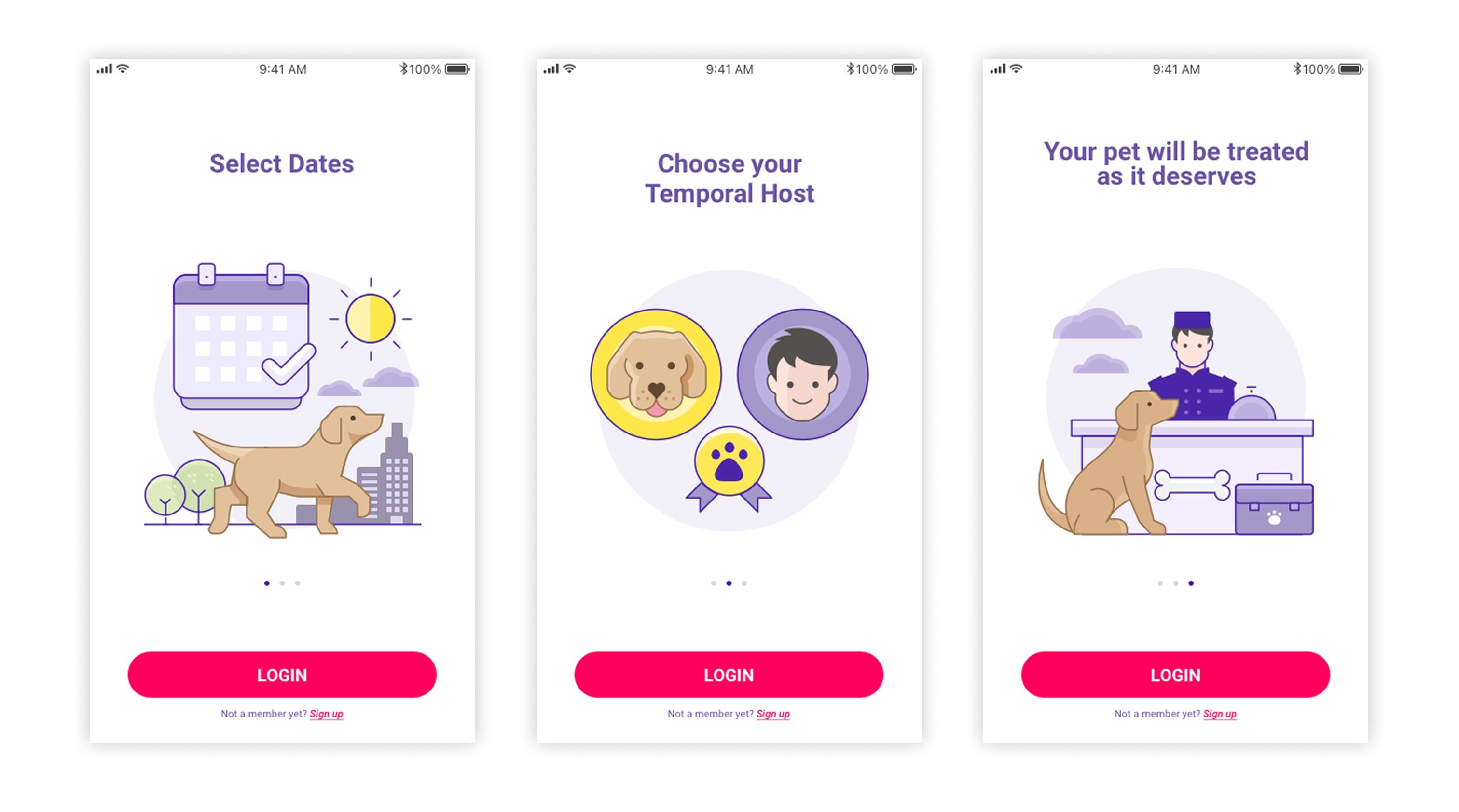
Onboarding & Value Proposition:
A clean, three-step walkthrough designed to build immediate trust. The flow concisely illustrates the platform's core model: connecting pet owners with verified local hosts for a safe, cage-free experience.
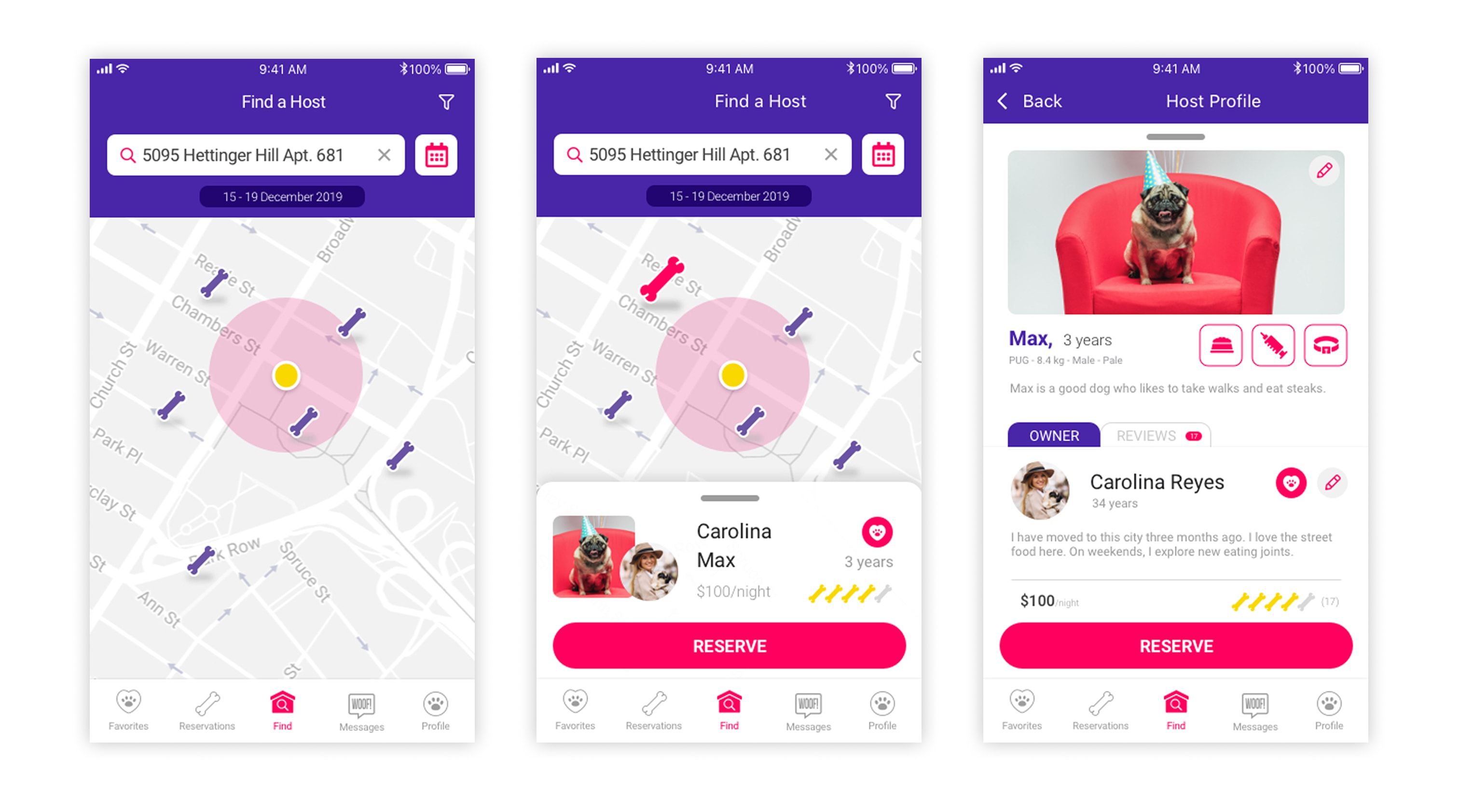
Smart Filtering & Host Details:
A streamlined search experience allowing owners to filter by specific home features and care capabilities. Profile screens are designed to prioritize trust signals, showcasing verified badges, real environment photos, and detailed host credentials.
Results & Learnings
The project delivered a complete prototype (onboarding, pet profile, host search, host detail, and booking flow) with a visual identity and design system built from scratch.
This was a personal project done in one month, driven by a real design question: how do you digitize trust? The answer isn't one big feature: it's accumulated small signals across every screen. Verification badges, real photos, behavioral compatibility data, review systems: none of them alone are enough, but together they create the confidence a user needs to hand over their pet to a stranger.
That thinking applies directly to any product where the user is making a high-stakes decision with incomplete information.